
Kelly Dodge and KD Sound Co.
Complied by Everett Hogan, Xavr Bravo, Lexi Ropp, Xander Smith, and Piper Jensick

The first time Kelly Dodge ever ran sound, he had exactly 45 minutes of training. Two exhausted volunteers at his local church needed help. Dodge raised his hand, learned the basics in under an hour, and then—almost without realizing it—ran sound there for the next twelve years. What started as a favor quietly planted the seed for a career he never planned.
Growing up, Dodge was told his future was already decided. He was “the computer guy,” destined to become an engineer. He followed that path faithfully, earning a degree in computer science and building a stable, well-paying career in software engineering. It checked all the right boxes—except fulfillment. While his day job paid the bills, his nights and weekends were spent volunteering, learning audio systems, staging, and live production the only way that really works: by doing it.
“I didn’t start KD Sound,” Dodge later reflected. “The business started me.”
“Early on, entrepreneurs must push-chasing clients, pitching services, proving credibility. Eventually, quality creates pull. Clients come to you because your reputation precedes you.”
That truth became clear when small opportunities began stacking up. After church came a local jazz festival. Then summer events at the Brewery Arts Center. Eventually, someone suggested he should probably get a permit—and maybe charge a little. His first “business card” was his phone number scribbled on a scrap of paper. When he finally upgraded to a professionally designed card, it felt symbolic: this side project was becoming something real. Then 2020 forced the issue.
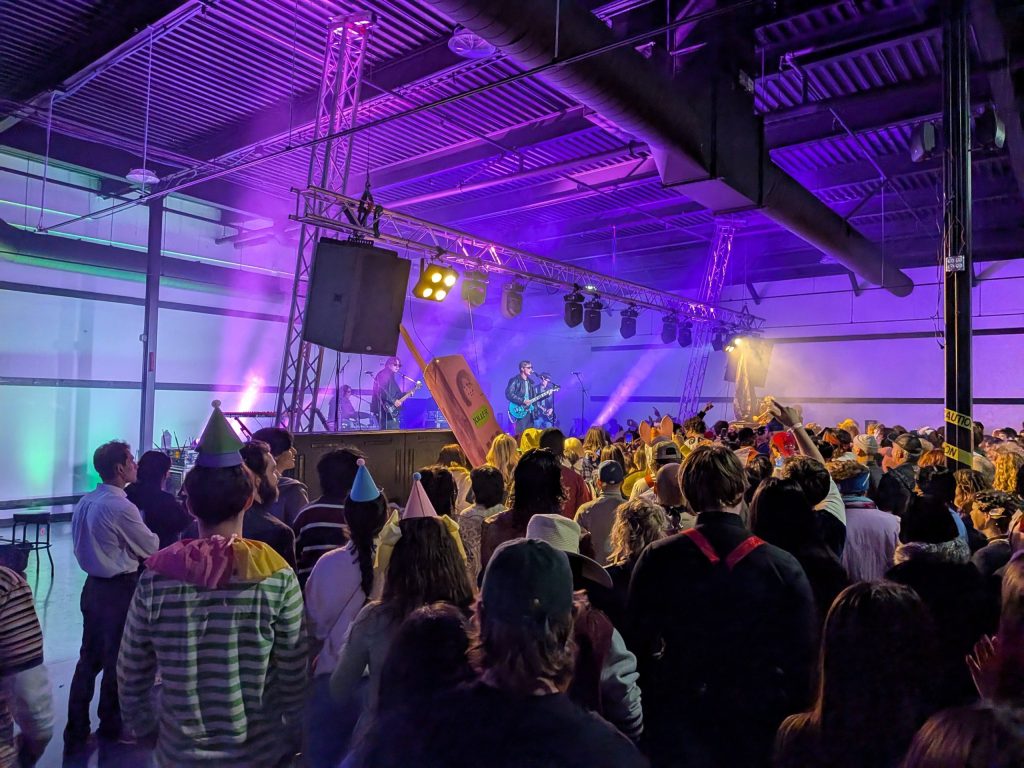
When Dodge lost his engineering job, KD Sound Co. instantly went from side hustle to sole source of income. With a mortgage to pay and no safety net, he leaned on the one skill his engineering background had drilled into him—problem-solving. His solution was simple and relentless: say yes to everything. Festivals, concerts, community events, and even a middle school girls’ volleyball game. If it needed sound, Dodge showed up.
That willingness to take every opportunity became a defining trait of his business. Six years later, KD Sound Co. employs ten part-time staff members and supports some of Carson City’s largest events, from local concerts to major festivals. But the road there was anything but smooth. Professional audio equipment is expensive, and more than once Dodge told his wife, “This is a stupid idea.” Each time, she refused to let him quit.

That support system mattered—because Dodge’s philosophy was never about doing the minimum. One of the most talked-about aspects of KD Sound Co is Dodge’s commitment to over-delivery. He has brought more than $35,000 worth of equipment to events that paid barely $100, simply because quality mattered more than margins. “I once used a soundboard with forty inputs for an event that needed five,” he said. “It sounded better.”
Sound quality has changed over the past 30 to 40 years because there’s a better understanding of physics. “We understand how speakers go with what is in the air and between our ears,” he said.
In an industry where failure is immediately obvious, Dodge operates with intentional excess. That mindset created a safety margin—and a reputation. Most of his business comes through word of mouth, driven by clients who remember how good their event sounded, not how little they paid.
That same commitment to quality pushed Dodge to become something of a modern generalist. When clients needed lighting, he learned lighting. When they needed a stage, he built one. Video production followed. Backline rentals followed that. What some business experts warn against as “scope creep,” Dodge treats as adaptation. He applies the same systems thinking from computer science—treating sound, lights, and video as interconnected networks rather than isolated tasks.
Rather than being spread thin, he became indispensable. Dodge explains business growth using what he calls “push and pull.” Early on, entrepreneurs must push—chasing clients, pitching services, proving credibility. Eventually, quality creates pull. Clients come to you because your reputation precedes you. For Dodge, reaching that pull phase wasn’t about marketing tricks; it was about never cutting corners, even when no one would notice.
Despite the growth, he remains candid about the toll entrepreneurship takes. Burnout is real. Sustainability, he says, depends on recalibration—knowing when to slow down—and on the people who believe in you when the risk feels overwhelming. Kelly Dodge’s story challenges the idea that success must follow a straight, corporate path. He didn’t abandon engineering; he repurposed it. He didn’t set out to be an entrepreneur; he responded to necessity.
From a 45-minute crash course at a church soundboard to becoming Carson City’s go-to production professional, Dodge proves that adaptability, persistence, and an uncompromising commitment to quality can turn accidental beginnings into lasting impact. For the Carson High School 2026 graduation, KD Sound Co. will be on full display with two large video walls and a sound system that replaces the traditional graduation ceremony PA system.
In the end, Dodge redefines mastery. A master of one may do one thing perfectly—but a jack of all trades makes sure the show goes on.